








How to Find the Right Custody Attorney
Look for a custody attorney who regularly handles cases in Charlotte, explains your options clearly, and gives you a written breakdown of fees. Ask how they would approach your concerns, whether through negotiation, mediation, or court. Choose someone who takes your child's safety and daily needs seriously, not someone who promises a result.
A custody dispute can make every decision feel urgent. The right legal guidance helps you focus on what matters now and prepare for what comes next.
I'm Kara Goodman, founder and managing attorney of The Goodman Law Firm in Charlotte. As a custody attorney, I help parents navigate family law disputes with a clear plan and compassionate counsel.

Understanding Legal Custody, Physical Custody, and Parenting Plans
When parents separate or divorce in North Carolina, one of the most critical steps is structuring an arrangement that ensures their children remain supported, secure, and loved. While emotions can run high, the legal framework provides a structured pathway to establish boundaries and clear expectations.
A comprehensive parenting agreement serves as the roadmap for your family's future, outlining everything from daily residential routines to major life decisions. Understanding the fundamental components of custody helps you focus on what truly serves your family's long-term well-being.
Defining Legal vs. Physical Custody and Non-Custodial Parental Rights
In family law, "custody" is divided into two primary categories: legal custody and physical custody. These concepts address different aspects of raising a child, and courts can award them either jointly or solely to one parent.
| Custody Type | Scope & Authority | Common Arrangements | Key Parental Rights Included |
|---|---|---|---|
| Legal Custody | Decision-making power regarding education, healthcare, religious upbringing, and welfare. | Joint Legal Custody (shared decisions) or Sole Legal Custody (one parent decides). | Access to school records, direct contact with physicians, involvement in emergency medical choices. |
| Physical Custody | The daily living arrangements, residential schedule, and physical care of the child. | Primary Physical Custody with visitation, or Joint Physical Custody (such as 50/50 time-sharing). | Right to regular scheduled parenting time, routine daily caregiving, safe living environment. |
Legal custody determines who makes significant, long-term decisions for the child. When parents share joint legal custody, both must collaborate and agree on major choices such as elective medical treatments, mental health counseling, school placement, and religious practices. If one parent has sole legal custody, they hold the final authority to make these choices without the other's consent, though they are often still required to keep the other parent informed.
Physical custody, on the other hand, governs where the child sleeps at night and handles day-to-day logistics. Many families benefit from structured 50-50 custody arrangements, where time is split evenly to maintain continuous bonding with both parents. In other cases, one parent is designated as the primary caregiver while the other enjoys scheduled parenting time.
It is important to understand that a parent who does not have primary physical custody still maintains clear legal rights. Unless a judge has entered an order restricting contact due to safety concerns, non-custodial parents retain the right to access school records, speak with teachers, review medical reports, and attend public school events or extracurricular activities. For those starting this process, understanding the steps to get joint custody in Mecklenburg County can help clarify the legal requirements for establishing a shared schedule.
Judicial Standards and the Best Interests of the Child
When parents cannot reach an agreement outside of court, a family court judge must decide custody arrangements based entirely on the best interests of the child standard. The court does not favor mothers or fathers based on gender; rather, judges evaluate how each parent supports the child's physical, mental, and emotional needs.
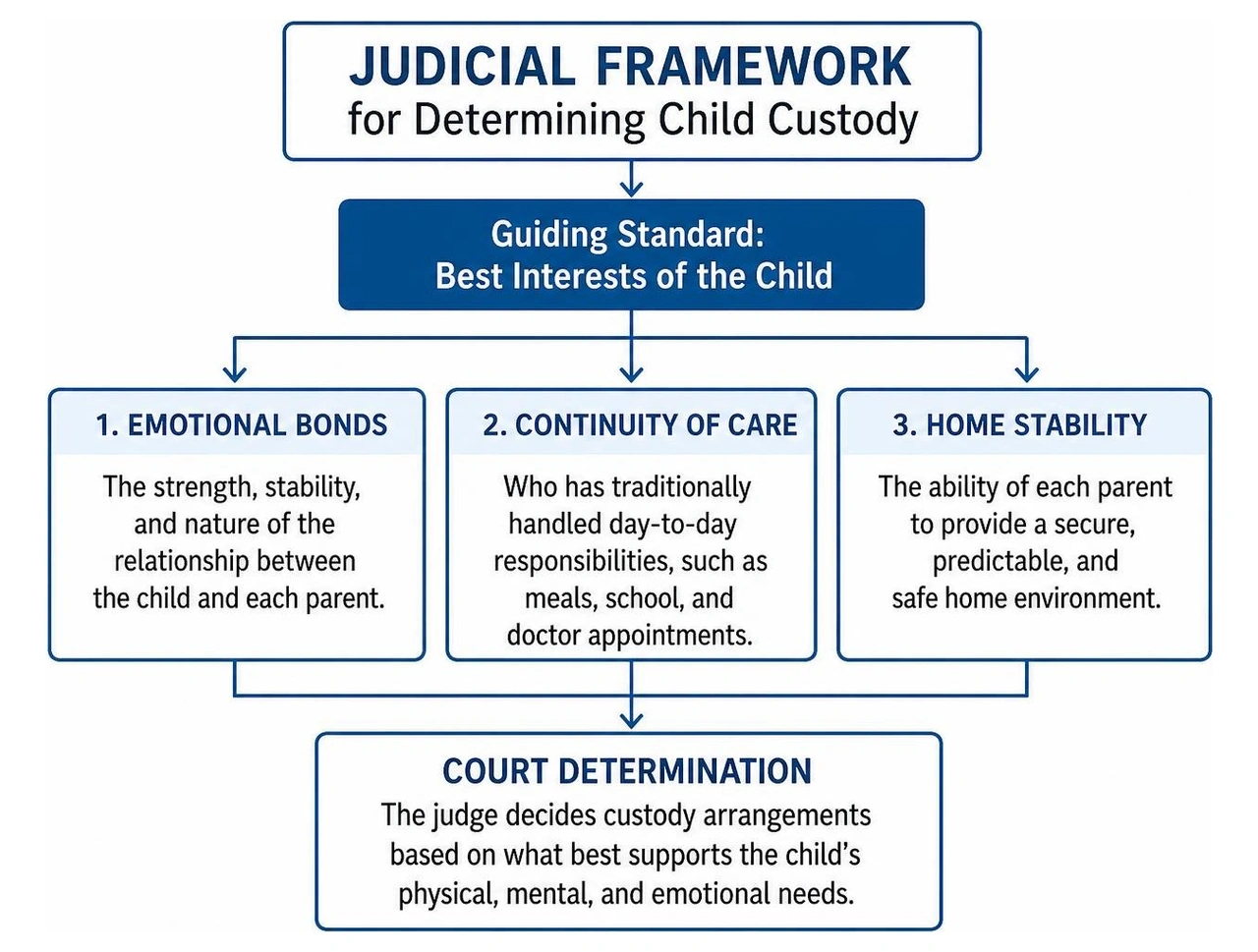
When evaluating the best interest of the child, courts review numerous factors, including:
- Emotional bonds: The strength, stability, and nature of the relationship between the child and each parent.
- Continuity of care: Who has traditionally handled day-to-day responsibilities, such as preparing meals, attending parent-teacher conferences, and managing doctor appointments.
- Home stability: The ability of each parent to provide a secure, predictable, and safe home environment.
- Parental capacity and cooperation: Each parent's willingness to encourage a healthy relationship between the child and the other parent.
- Safety concerns: Any past history of domestic violence, substance misuse, or neglect that could jeopardize child safety.
Judges rely on detailed evidence rather than subjective claims when weighing these legal factors in custody determinations.
When to Hire a Custody Attorney for Your Family Law Case
Navigating custody discussions alone can be overwhelming, especially when communication between parents breaks down. Having dedicated legal advocacy ensures your parental rights remain protected while keeping the child's welfare at the center of every decision.
Strategic Triggers for Hiring Legal Counsel

While some parents successfully navigate uncontested agreements through mutual cooperation, certain situations demand immediate legal representation. You should consult a lawyer promptly if:
- The custody dispute is contested: You and your co-parent cannot agree on basic schedules, school choices, or medical decisions.
- There are safety or domestic risks: Allegations of domestic abuse, child neglect, or uncontrolled substance abuse require protective legal intervention, such as emergency custody motions.
- One party attempts relocation: A parent plans to move the children away from their established community, school district, or support system.
- Communication is manipulative or high-conflict: You face false allegations, alienation attempts, or persistent violations of existing schedules.
For parents who have recently separated, obtaining early guidance for newly separated parents can prevent informal temporary habits from turning into disadvantageous permanent custody orders.
The Role of a Court-Appointed Custody Attorney for Children
In complex or high-conflict custody litigation, the court may appoint an independent legal professional to represent the child's interests directly. Understanding these roles helps parents navigate interactions with court officials:
- Guardian ad Litem (GAL): A neutral investigator appointed by the court to investigate family dynamics. The GAL interviews parents, teachers, therapists, and the child, conducts home visits, and provides a formal written recommendation to the judge regarding what custody arrangement best serves the child.
- Child’s Best Interest Attorney: A lawyer appointed to advocate for what they independently determine is in the child's best interests, even if that recommendation differs from what the child verbally requests.
- Child Advocate Attorney: An attorney who represents the child with traditional attorney-client confidentiality, advocating directly for the child's expressed desires in court.
- Child's Privilege Attorney: Appointed specifically to evaluate whether confidential therapeutic or psychiatric records of the minor should be released or protected during litigation.
These court-appointed representatives provide unbiased context, ensuring the judge receives a clear picture of the child's daily reality beyond parental testimony.
What to Expect When Consulting with a Custody Attorney
During an initial legal consultation, you should expect a transparent, professional assessment of your case. A qualified family lawyer will evaluate the strengths and weaknesses of your position, discuss resolution strategies, and explain fee structures.
Attorneys typically charge hourly rates billed against an upfront retainer deposit, though some specific services may be structured as flat fees. Unused portions of a retainer are generally returned to the client upon case completion. Additionally, in certain situations involving significant income disparities or bad-faith litigation, courts may consider fee-shifting requests, requiring one party to contribute toward the other's legal costs.
When evaluating family law qualifications, verify that your prospective counsel maintains clear communication practices, understands local court dynamics, and holds a strong disciplinary standing with the state bar.
Navigating High-Conflict Disputes, Relocation, and Custody Modifications
Even well-crafted parenting plans can face challenges when personal circumstances change or when high-conflict behaviors emerge post-separation.
Managing Parental Alienation and Complex Co-Parenting Battles
Parental alienation occurs when one parent systematically undermines, disparages, or manipulates a child to damage their relationship with the other parent. Left unaddressed, alienation can cause severe emotional harm to the child and disrupt parental bonds.

When dealing with high-conflict dynamics:
- Maintain a detailed parenting log: Record all scheduled parenting times, pickups, drop-offs, and any missed or denied visits.
- Preserve digital communications: Save text messages, emails, and messages sent through co-parenting applications. Keep your own responses polite, factual, and focused entirely on logistics.
- Avoid public or verbal confrontations: Never argue in front of your children or use them as messengers between households.
- Rely on objective records: Collect report cards, attendance logs, and medical visit confirmations from third-party professionals to substantiate your ongoing parental involvement.
If your co-parent routinely undermines your relationship with your child, seeking high-conflict co-parenting advocacy or exploring legal remedies for parental alienation is essential to protecting your parental rights.
Modifying Existing Parenting Plans and Relocation Requests
Life rarely stands still. Career changes, remarriages, and evolving children's schedules frequently make existing court orders impractical over time. However, a parent cannot simply alter a custody arrangement without judicial approval or a mutual formal agreement.
To request a court-ordered modification, the moving parent must demonstrate a substantial change in circumstances affecting the welfare of the child that occurred after the entry of the previous order.
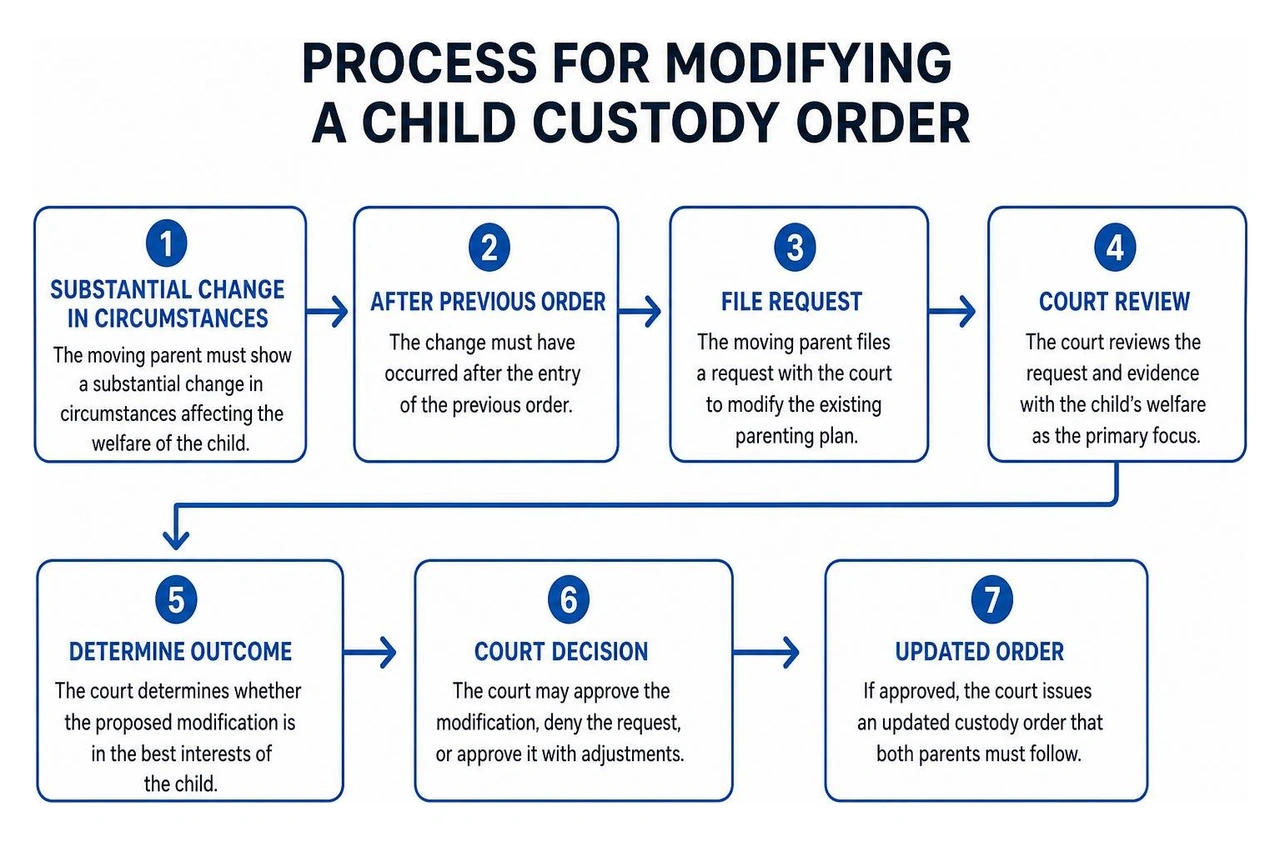
Circumstances warranting a modification review may include:
- Involuntary changes in work shifts or employment hours.
- A parent's relocation to a different city or school district.
- Major changes in the child's educational, medical, or developmental needs.
- Persistent refusal by one parent to follow the established court order.
Reviewing custody modification legal standards and obtaining tailored child relocation legal guidance helps ensure that any requested adjustments meet statutory requirements while keeping your child's routine as stable as possible.
Resolving Custody Disputes Outside the Courtroom
Court litigation is not the only path to resolving family disagreements. In fact, many parents find greater long-term success, lower stress, and reduced financial costs by utilizing alternative dispute resolution methods.
Custody Mediation and Parenting Coordinators
Mediation provides a confidential, structured environment where parents work with a neutral professional to negotiate custody terms amicably. Rather than leaving decisions in the hands of a judge, mediation allows parents to craft custom schedules tailored to their child's specific routine.
Key benefits of utilizing parenting plan mediation services include:
- Empowerment and control: Parents maintain direct decision-making authority over their schedules rather than having a rigid court order imposed upon them.
- Cost and time efficiency: Resolving disagreements in mediation is generally faster and less expensive than extensive courtroom litigation.
- Improved communication: The collaborative environment fosters long-term cooperative co-parenting habits.
In cases involving recurring minor schedule disagreements, parents may also work with a parenting coordinator—a designated neutral specialist authorized to help resolve ongoing logistical disputes quickly without filing new motions in court. Establishing comprehensive shared parenting agreements early on creates clarity and minimizes future misunderstandings.
Collaborative Family Law and Structured Negotiations
Collaborative family law is another non-adversarial approach where both parents and their respective attorneys sign a participation agreement committing to resolve all issues outside of court.
In this process, parents work alongside an interdisciplinary team that may include child specialists, financial neutrals, and divorce coaches. Exploring collaborative parenting plan options enables families to address emotional and practical concerns holistically, creating durable agreements that prioritize child stability without the hostility of courtroom battles.
Frequently Asked Questions about Child Custody and Legal Counsel
Can divorcing parents share the same attorney in a custody matter?
No. Under state legal ethics rules, a single attorney cannot represent both parents in a divorce or child custody dispute. Representing both sides creates an inherent conflict of interest, even if you and your spouse currently agree on all terms.
While a lawyer can act as a neutral mediator to help both parties draft an agreement, they cannot provide legal advocacy or strategic advice to either individual in that role. Each parent should obtain independent legal counsel to ensure their personal rights and interests are fully protected.
At what age can a child choose which parent to live with?
In North Carolina, a child does not have the absolute legal right to choose where they live until they reach the age of majority (18 years old).
However, when a child reaches an age of discretion—typically around 13 years of age or older—a judge may consider the child's wishes, provided the child demonstrates sufficient maturity and sound reasoning. The court weighs this preference alongside all other best-interest factors, ensuring the child's choice is not the result of manipulation, parental pressure, or superficial incentives.
How are legal fees and retainer costs handled in a custody case?
Family law attorneys typically work on an hourly basis, requiring an upfront retainer deposit before beginning work on your case. As work is performed—such as drafting pleadings, attending mediation, conducting discovery, or appearing in court—fees and case expenses are billed against this retainer.
Clients receive periodic billing statements detailing the time spent on their matter. Any unearned retainer funds remaining after your case concludes are refunded to you. In situations involving financial hardship or improper conduct by the other party, your attorney can petition the court to request that the opposing party contribute to your legal fees under applicable state statutes.
Conclusion
Guiding your family through a separation or custody disagreement requires thoughtful strategy, clear legal boundaries, and an unwavering commitment to your child's well-being. Whether you are establishing an initial parenting schedule, modifying an outdated order, or navigating high-conflict co-parenting dynamics, you do not have to carry this burden alone.
At The Goodman Law Firm, we bring over 15 years of dedicated family law experience to help parents achieve practical, balanced resolutions through strategic negotiation, collaborative methods, or decisive courtroom advocacy. If you are facing a family transition and need clear direction, reach out to us today for a confidential consultation with a dedicated child custody attorney who will put your family first.
We’re Here When You Need Us
Family law challenges can feel overwhelming, but you don’t have to face them alone. Let’s talk. Reach out today, and let’s take the next step together.